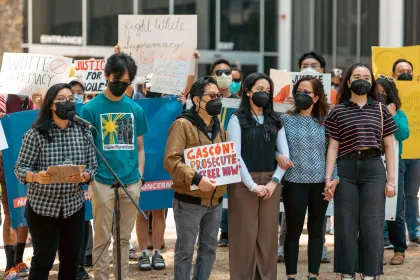

Since 2009, the Bill Sorro Housing Program (BiSHoP) has advocated for the rights and protections of low-income tenants and families in San Francisco. In a city where the rent for a one-bedroom apartment averages at least $3,000 per month, such advocacy is sorely needed.
BiSHoP provides multilingual assistance in Spanish, Arabic, and Tagalog, as well as one-on-one counseling on tenants’ rights, housing case management, and educational workshops. Housing counselors like Angelyne Peñalosa help tenants navigate the housing lottery process, apply for rental subsidies, and even avoid displacement.
"Rent has become more and more unsustainable, to the point where tenants must choose between necessary expenses like food and clothing just to afford rent. That's not a society we want to promote," Peñalosa said.
The Bay Area is the most expensive region in the country, with California rental housing and utilities well above national averages. Housing costs in San Francisco surged during the dot-com boom of the 1990s when new tech startups settled in the city. They have continued to climb with the expansion of the artificial intelligence industry.
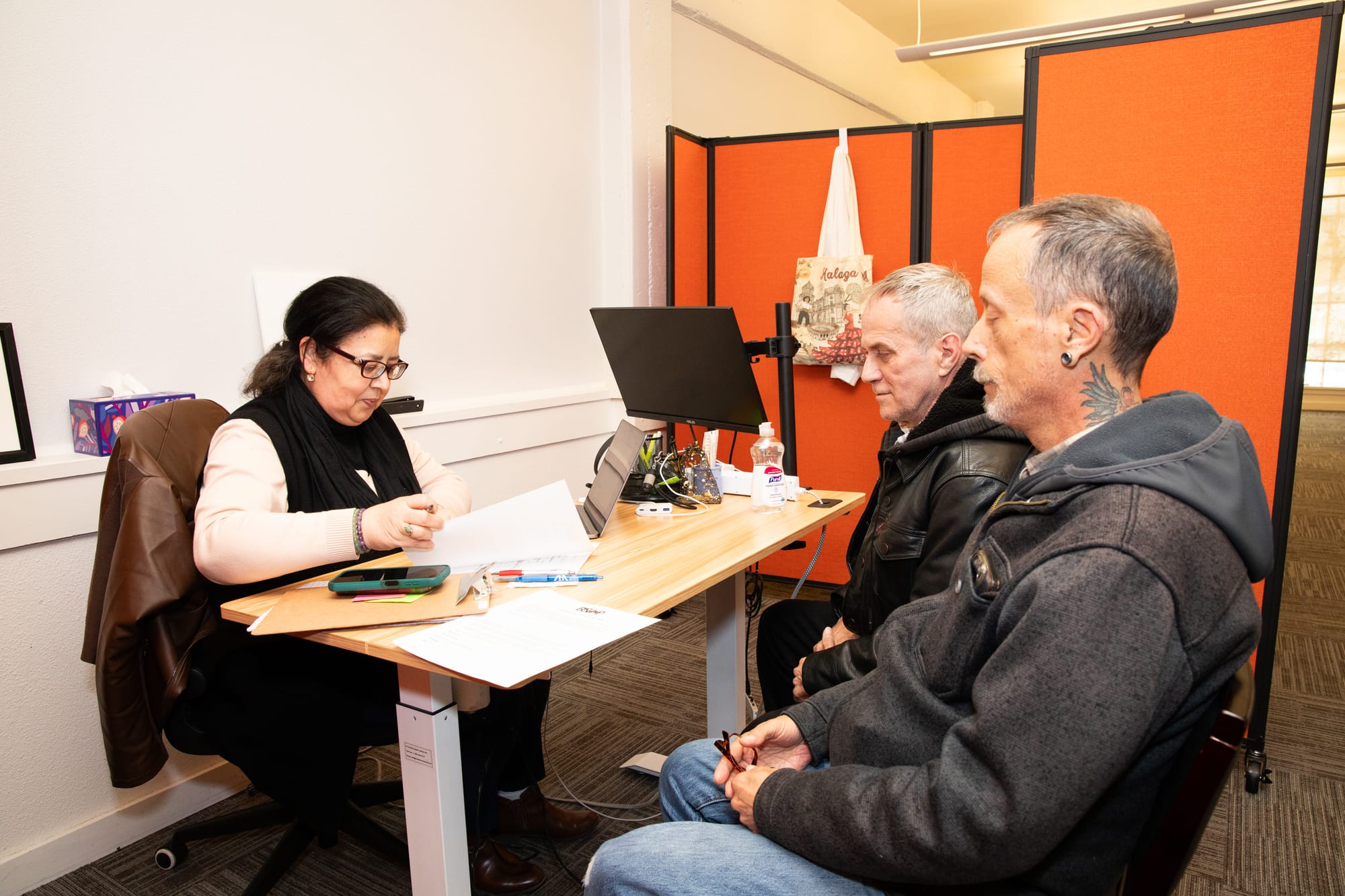

Left: BiSHoP Housing Navigator and Educator Fatima Oualdali assists Gerald Leatherman in applying for housing. Right: BiSHoP Community Manager Andrew De La Cruz speaks to clients during an affordable housing workshop on March 3, 2026, in San Francisco’s South of Market on March 3, 2026. Photos: Ekevara Kitpowsong for Mahalaya

According to state income limits, a two-person household earning $100,000 can be considered low-income in high-density Bay Area counties. Rising income inequality has made the race for affordable housing more competitive and unattainable for the most vulnerable.
“San Francisco’s affordable housing properties and units no longer serve those who are extremely low-income or even low-income, making it difficult for folks to move from the homelessness system to the affordable housing system,” Peñalosa said. “This disconnect perpetuates a cycle and pattern of reaching resource limits and needing more homelessness resources.”
Ninety percent of BiSHoP’s clients are considered "very low income," earning $53,950 or less per household. Most make 30% to 65% less than the median income and are among those most at risk of becoming homeless. Peñalosa said many low-income tenants are left to make do with substandard housing, even at times in near-uninhabitable conditions.
Executive Director Rick Cantora said the housing disparity has roots in discriminatory policies from the Ronald Reagan era that have since been normalized. In response, organizations like BiSHoP continue to fight for housing as a basic human right.

"Housing is, among the biggest catalysts for social change. I believe that when people are safely housed, they're able to focus and funnel their other resources, their time, their effort, their money towards personal growth," Peñalosa said.
Developers and politicians, notably gubernatorial candidates, are pushing to deregulate land-use protections so developers can build more. The idea is that building more housing will lower costs, a concept known as “trickle-down housing.” However, housing justice advocates caution against deregulation, citing further gentrification as an unwelcome consequence.
The practice of "trickle-down housing" will not solve the city's immediate housing crisis, Cantora said. Rather, it will only attract those who can afford such rents and alienate the rest of the population.
“The housing crisis is an intersection of greed and an antiquated way of thinking about housing as a commodity rather than a human right and necessity,” Cantora said. “We continue to rehash failed policies and look at homelessness in this country as an individual's problem or failure. It’s a very tired narrative that is trying to individualize a societal problem. We all deserve better than our current housing system.”

A poster of the “Bill Sorro-Presente!” mural on display at BiSHoP's office on Mission Street in San Francisco’s South of Market neighborhood, on March 3, 2026. The mural features Bill Sorro, a human rights activist and leader in the struggle to save and rebuild the International Hotel. Photos: Ekevara Kitpowsong for Mahalaya
The city has tried various measures to address affordability, including a Family Zoning Plan that would add 82,062 new units. The plan reserves 32,881 units for low-income households. Yet Cantora emphasizes that building alone, without deeper policy change, will not solve the underlying crisis for those most in need.
Cities like Santa Barbara and New York City are testing rent freezes to help tenants cope with rising living costs, while about 19 states have raised the minimum wage. Cantora believes solving the housing crisis requires more radical solutions, such as social housing, and reevaluating housing as a societal issue.
"We shouldn't be afraid of new policies, new ways of thinking about housing beyond the sorts of things that have been connected with austerity, year after year, decade after decade. We can have a system that provides people with safe, dignified, and long-term housing,” Cantora said.
BiSHoP builds on the organizing efforts of Bill Sorro, a human rights activist and leader in the struggle to save and rebuild the International Hotel. The organization calls for rent control and will advocate for a 30% increase in affordable housing during the next election cycle.
“The legacies of community leaders like Bill Sorro and Violeta 'Bullet' Marasigan remain strong to this day,” Cantora said. “There are many people who stand on their shoulders, who believe in and are working to build a different housing system that, at its core, treats people with dignity and respect.”
If you are facing eviction, experiencing homelessness, or are encountering issues with your landlord, please visit bishopsf.org for more information. Drop-in counseling sessions are available on the first two Tuesdays of every month.